Millais’ “Ophelia”, depicting Shakespeare’s Ophelia floating among wildflowers as she — serene, oblivious, beautiful — drowns, was the painting that directly inspired Letov to write the song that made it into Tulubaikaporia. In the Episode One, however, Ophelia drowns not in a stream but in a pot of borscht.
How I wish, how I wish you were here
Ophelia drowning in a borscht bowl, year after year
Running over the old ground, what have we found?
The same old fears, I wish you were here.
John Everett Millais — Ophelia (1851–52)
Oil on canvas · Tate Britain, London

Public domain · Wikimedia Commons

Despite Millais’ painting being seemingly the most famous, many other artists over the years painted Ophelia, too. John William Waterhouse was so obsessed with the lady that he painted her three times in different settings, here’s the best one:
John William Waterhouse — Ophelia (1894)
Oil on canvas · Private collection
Possibly the most recognisable of Waterhouse’s Ophelias.

Public domain · Wikimedia Commons
.jpg)
Then we have a by no means exhaustive variety of other Ophelias: the most dramatic by Alexandre Cabanel, the most symbolist by Odilon Redon, and the most drowned by Paul Albert Steck:
Alexandre Cabanel — Ophelia (1883)
Oil on canvas · Private collection

Public domain · Wikimedia Commons

Odilon Redon — Ophelia (c. 1900–05)
Pastel · Symbolist

Public domain · Wikimedia Commons

Paul Albert Steck — Ophelia (1894)
Oil on canvas · Petit Palais, Paris

Public domain · Wikimedia Commons

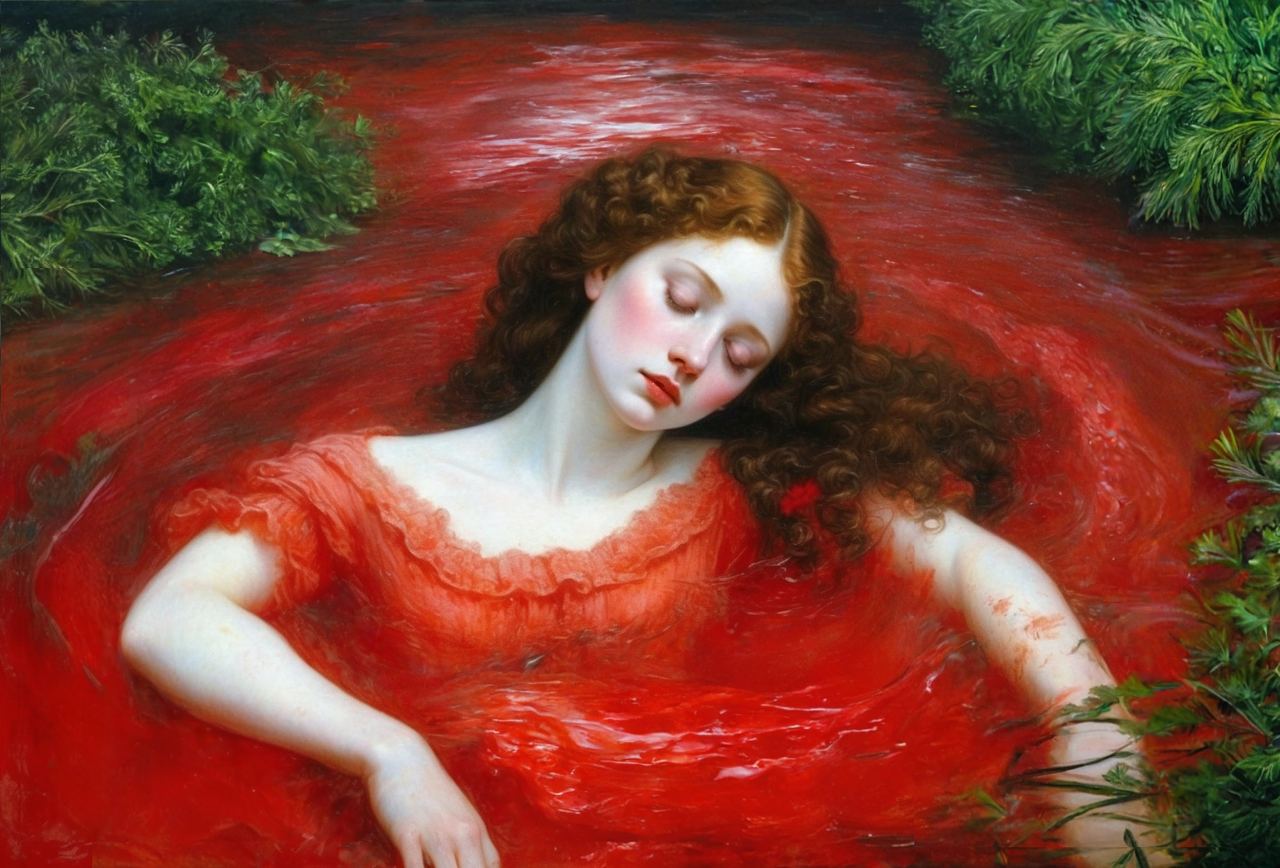
And to close the Ophelia parade, the AIphelia drowning in the river of borscht: