Before us — an arcade, a long illuminated corridor with beige brick walls and a few dozen glass doors under an arching glass roof. The shops and restaurants are closed and dimly lit, the lights of melon-sized bulbs hanging sadly above empty counters.
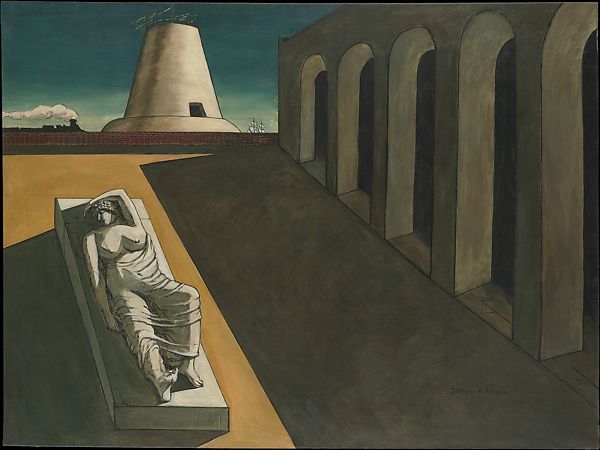
We’re traversing a piazza, a concave square made of thousands of thousand-year-old convex stones polished by time and soles. In the middle of the piazza is a fountain with a statue of Venus.
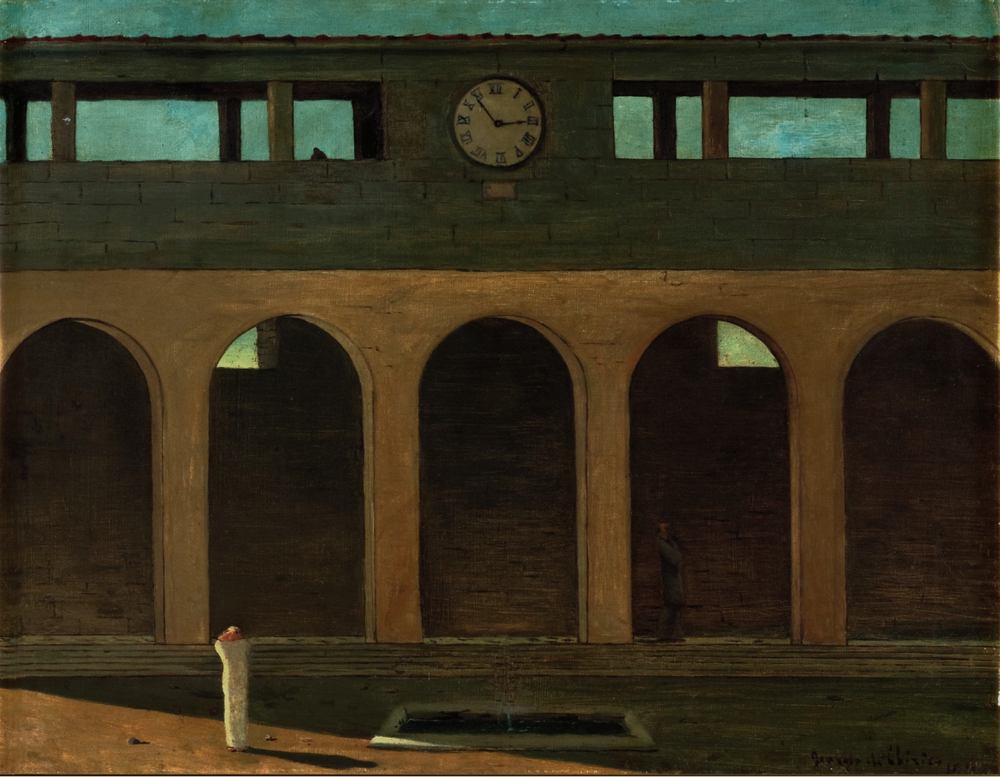
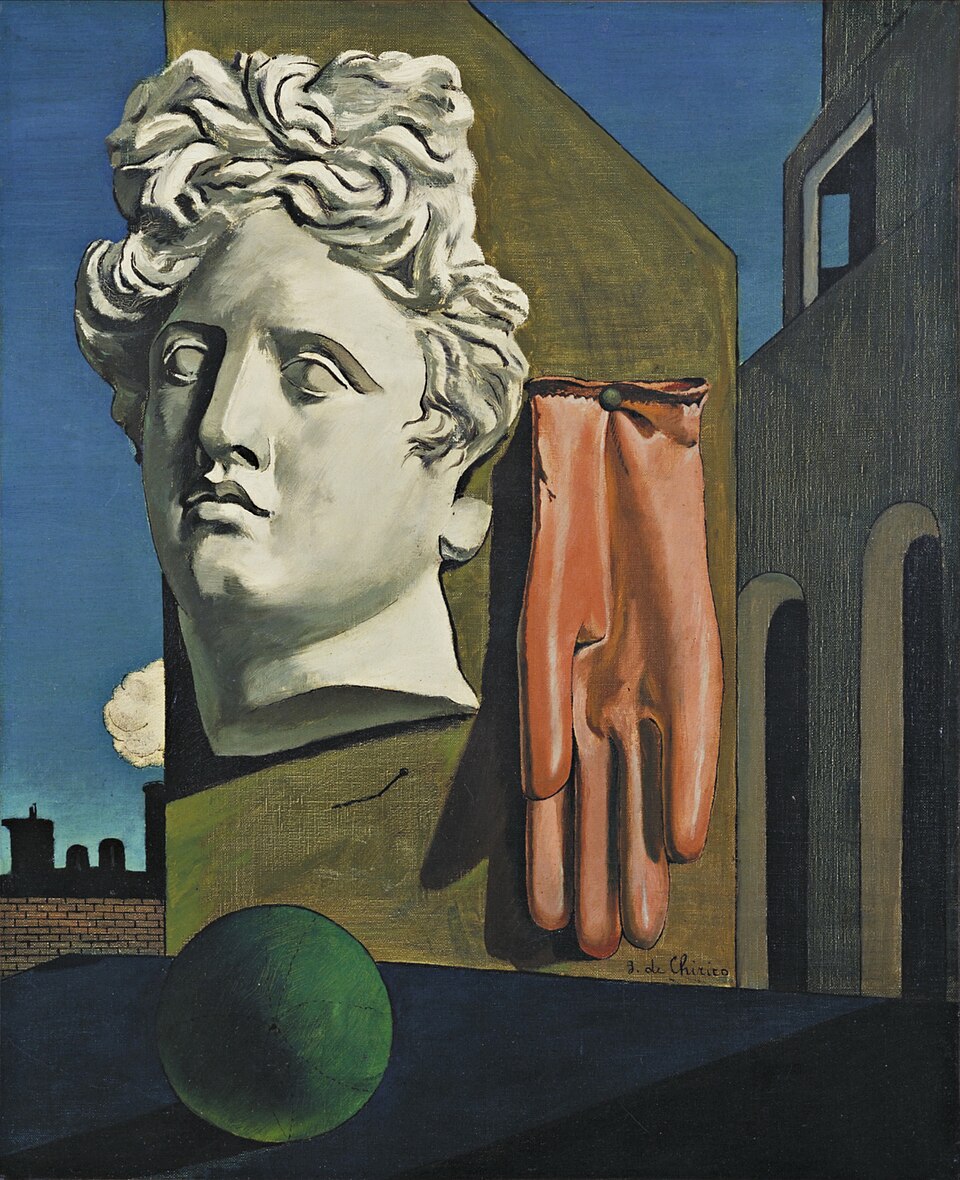
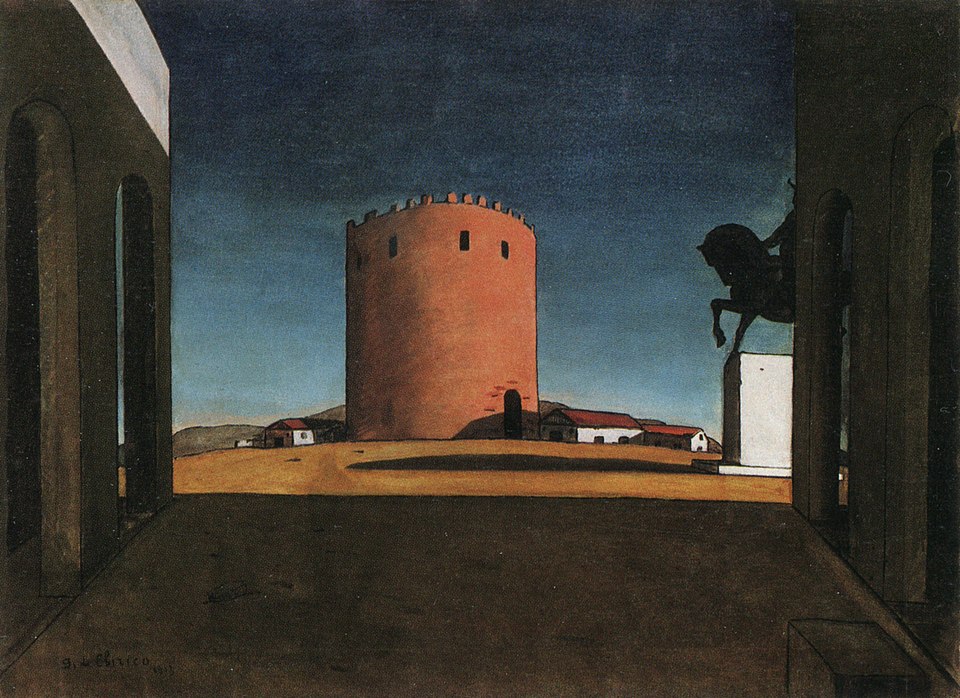
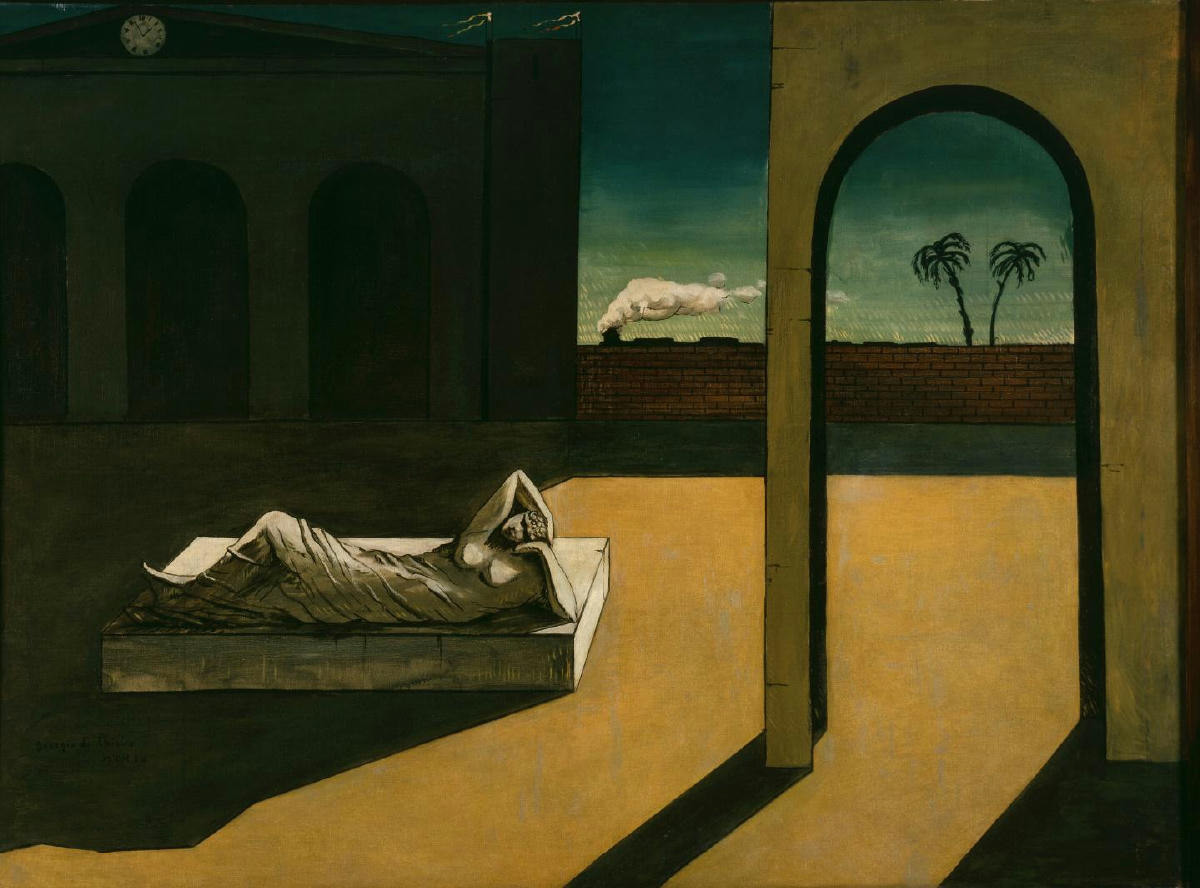
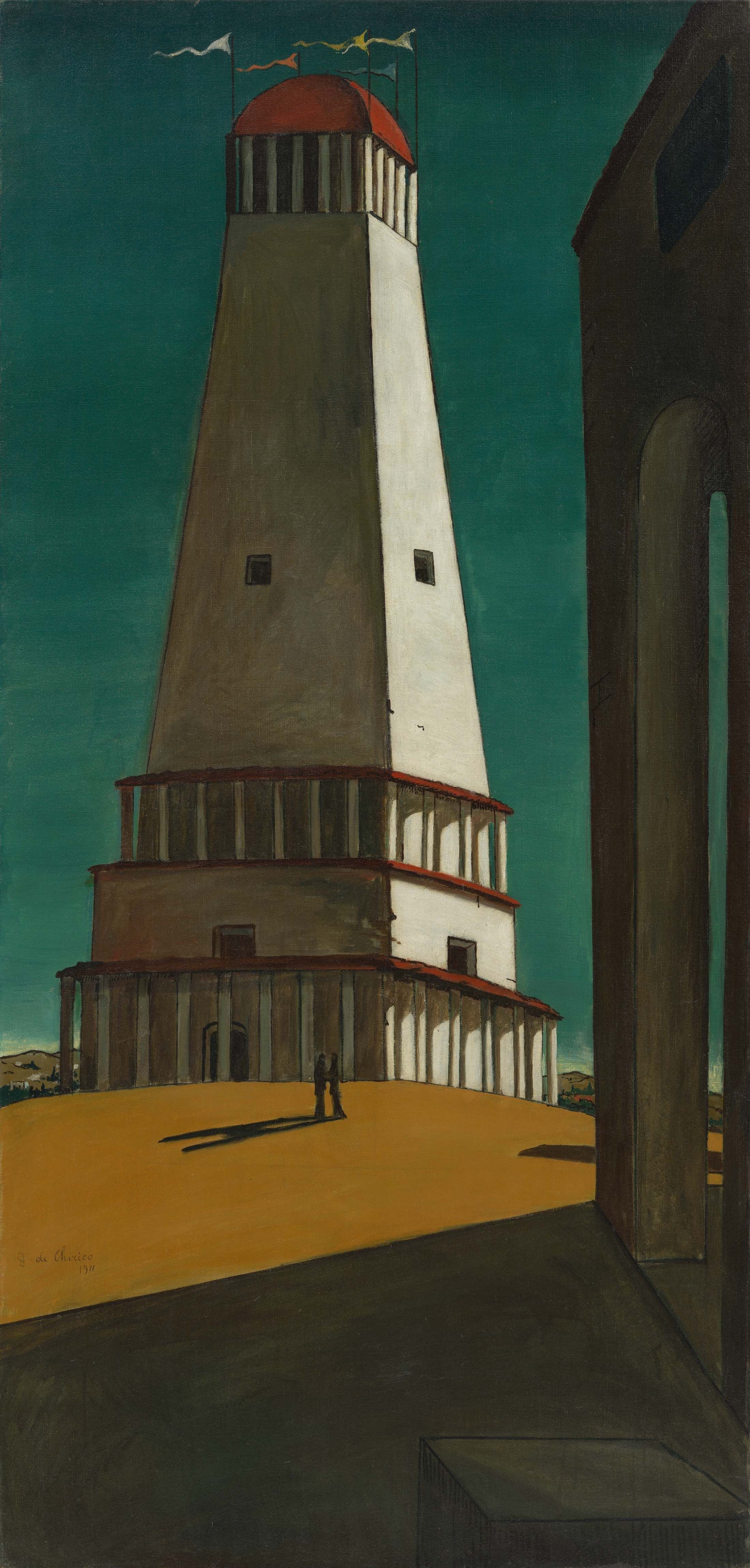
The unnamed and rather dislocated / liminal city of Episode Two, with its arcades, piazzas, canals, cobblestones, and seafood terraces under plexiglass, is located somewhere between Amsterdam and Rome, Venice and London, but it should look most like a Giorgio de Chirico painting, metaphysical cityscapes, which he painted in the 1910s and 1920s, depict exactly this kind of space: empty arcades casting long shadows, deserted piazzas with lone statues, a pervasive atmosphere of mystery suspended between dream and waking.
The very first painting in this style was The Enigma of an Autumn Afternoon (1910). The painting depicts a part of Florence’s Piazza Santa Croce with oversimplified details. The main things we see are the almost empty square, the plain facade of the Basilica of Santa Croce and the headless statue right to it. De Chirico painted it during his recovery from a serious illness which made him see the piazza differently, as ill as he was. So he painted the piazza with that in mind, not focusing on the Basilica or any other objects per se, but focusing on his perception and vision of it instead.
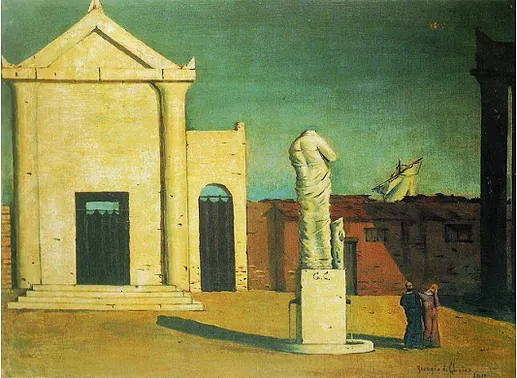
None of the paintings depict night, when the Episode Two happens, and yet they map onto the episode’s mood and setting almost perfectly: